





Bridal makeup pricing guide: how much to charge in 2027
Charging too little burns you out. Charging without a plan loses bookings. A simple way for bridal makeup artists to set prices, build packages and show them.
"How much should I charge?" is one of the hardest questions for makeup artists. Charge too little and you work every weekend and still struggle. Charge without a clear plan and brides do not understand what they are paying for.
Prices vary a lot between cities and artists, so we will not give you a magic number. We will give you a way to find yours.
Key points
Work out your real cost per wedding first: time, products, business costs and taxes.
Your floor price is time cost plus product cost plus a share of business costs plus profit.
The Knot's 2026 study puts the bride's hair and makeup at about $300 combined on average. Use it as a reference, not a rule.
Build three clear packages, show starting prices everywhere, and raise prices for new bookings when you are fully booked.
Step 1: Know your real cost per wedding
Most artists only count the time they spend on the bride's face. The real job is much longer.
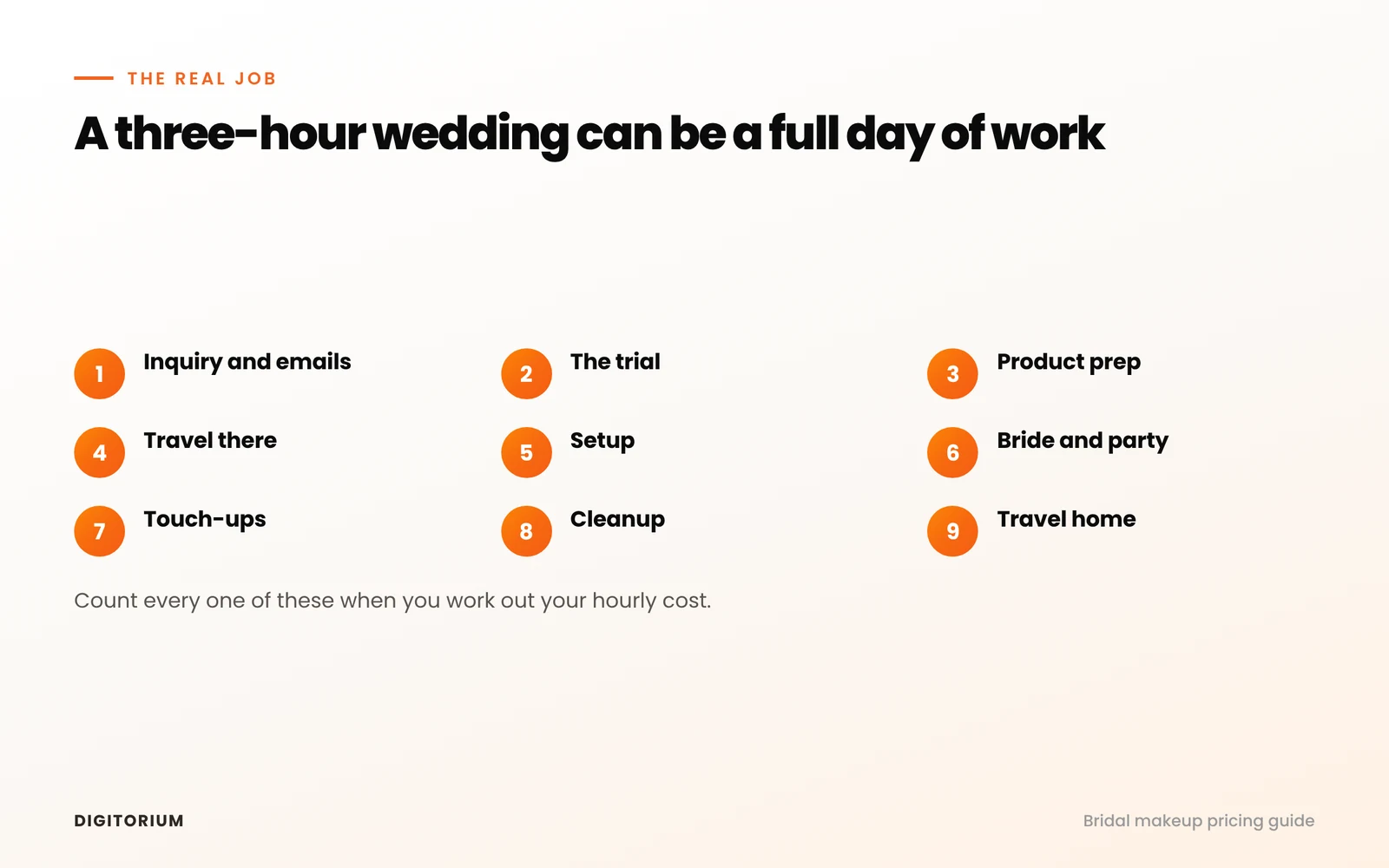
Add up for a typical wedding:
Time: emails, the trial, prep, travel, setup, the makeup itself, touch-ups, travel home.
Products: what you use per person, including disposables.
Business costs: insurance, kit replacement, software, marketing, phone, car. Divide your yearly total by the number of weddings you do.
Taxes and savings: set aside a share of every booking.
Step 2: Use a simple pricing formula
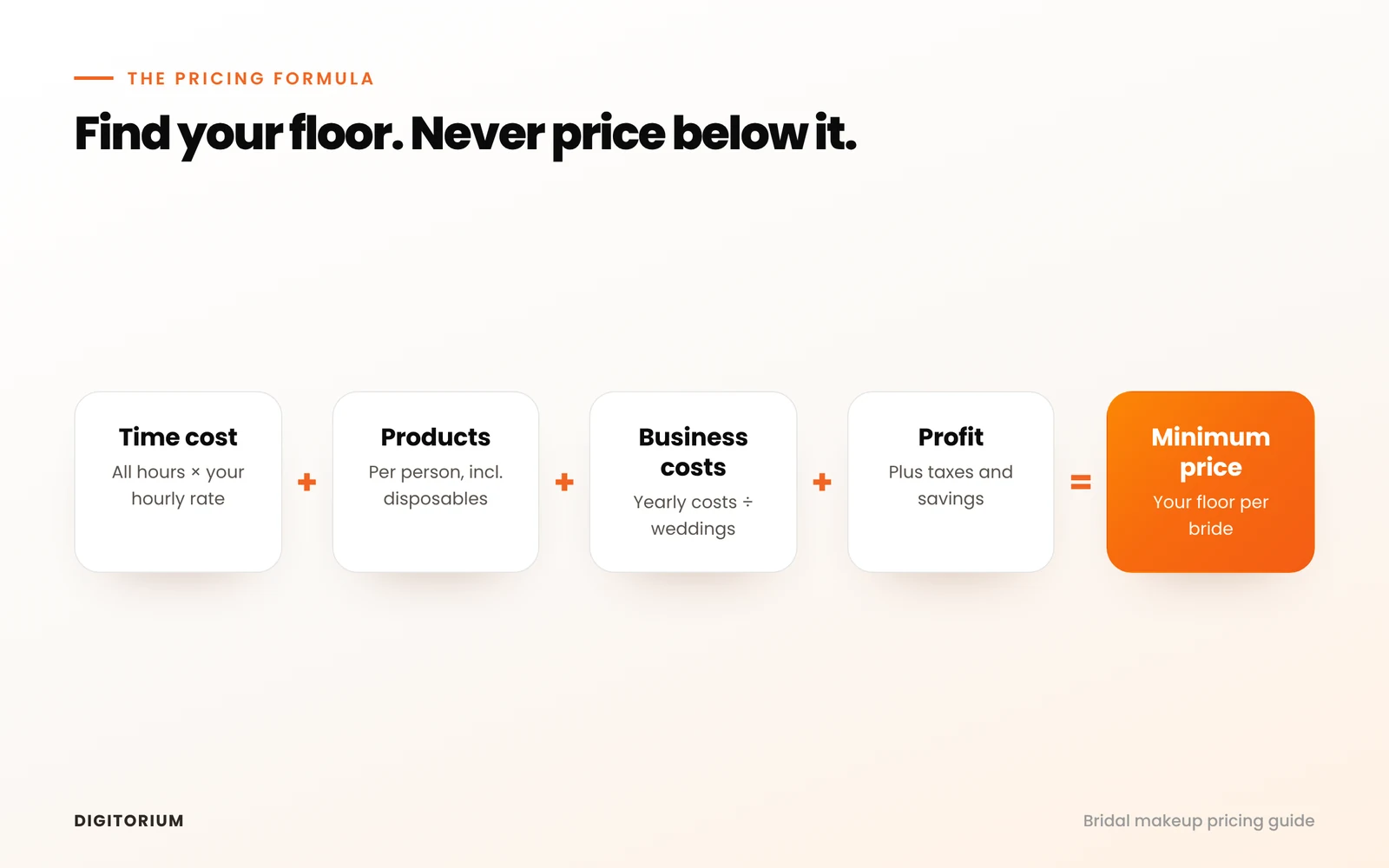
This number is your floor. Below it, every booking costs you money, even if it does not feel that way.
Step 3: Check your market
What couples actually spend: The Knot's 2026 Real Weddings Study, based on 10,474 US couples married in 2025, puts the average for the bride's hair and makeup at about $300 combined, roughly $150 each, not counting trials or tips. Bridesmaids average about $210 per person for both. Regional averages for the bride ranged from about $260 in the Midwest to $360 in the Northeast and Mid-Atlantic.
Use these as a reference point, not a rule. Experienced bridal specialists often charge well above the average, and your own floor matters more.
Now look at what other bridal artists in your area charge. Pick five to ten with similar experience and style, and note their starting prices on their websites and directory profiles.
If your floor is well below the market, you are likely undercharging. If it is above, you need to show clearly why you are worth it, or reduce your costs.
Step 4: Build clear packages
Brides find packages easier to compare than long lists of extras.
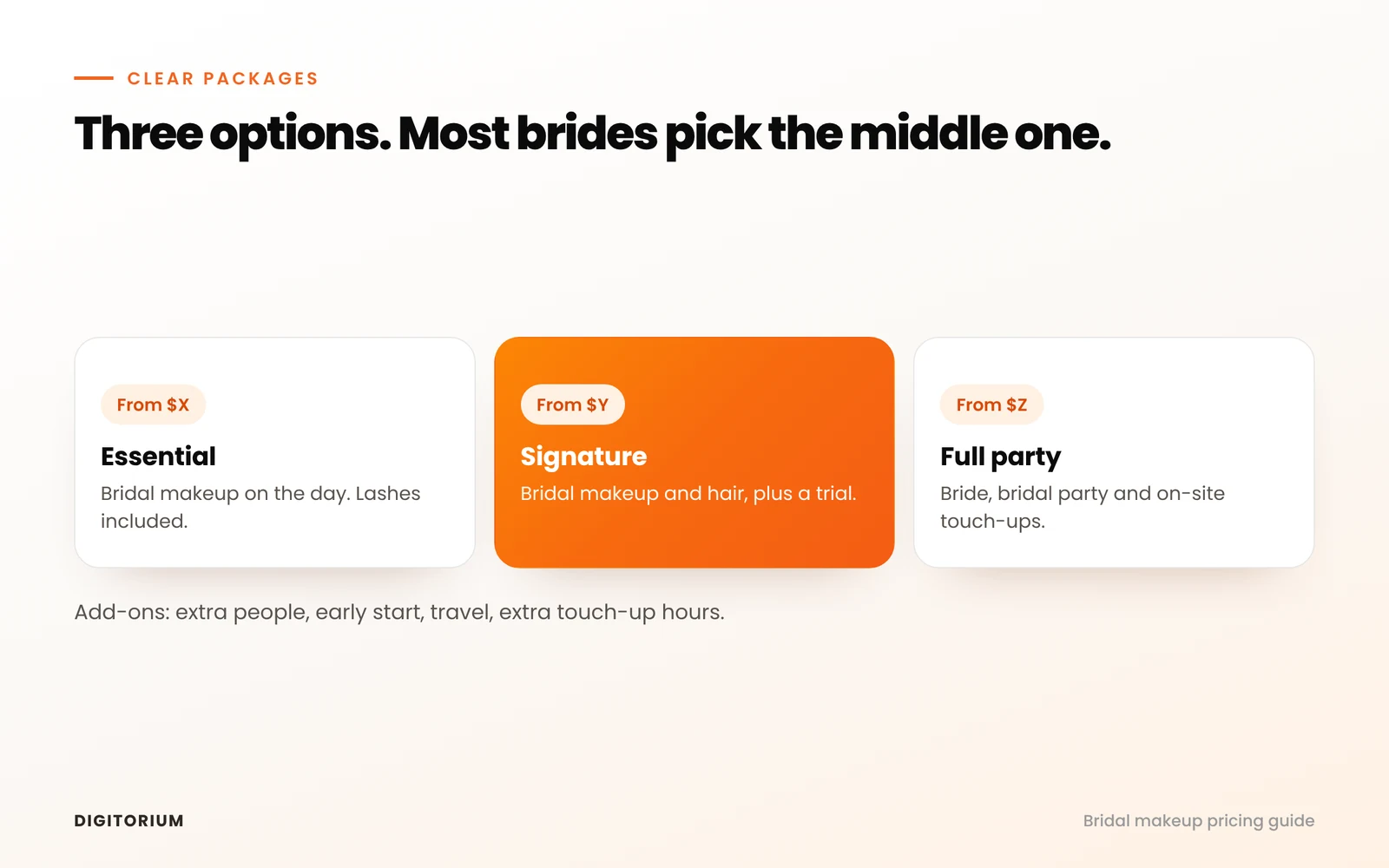
A common structure:
Essential: bridal makeup on the day.
Signature: bridal makeup and hair, plus a trial.
Full party: the bride, a set number of bridal party members and on-site touch-ups.
Then list add-ons clearly: extra people, lashes, early start fees, travel, touch-up hours.
Step 5: Show your prices with confidence
Put starting prices on your website, Google profile and directories. "Bridal makeup from $X" is enough.
When you send a quote, list what is included, the retainer to book, and when the balance is due. A clear quote feels professional and avoids awkward questions later.
When to raise your prices
You are fully booked months in advance.
You are turning down more inquiries than you take.
Your costs have gone up.
You have new skills, more experience or a stronger portfolio.
Raise prices for new bookings, and honor the price you quoted to brides who already booked.
Quick answers
Should I charge for trials?
Most bridal artists do. A trial takes real time and product. Some credit part of the fee to the wedding package if she books.
How much should my retainer be?
Many artists take a non-refundable retainer to hold the date, often a meaningful share of the total. Put the amount and terms in your contract.
Should I charge a travel fee?
If you travel beyond a set distance, yes. Say clearly where travel fees start and how they are calculated.
Sources
Read next: How to get more leads from The Knot and WeddingWire, or start with the full guide on how to get more bridal makeup clients.
Want a second opinion on your pricing page?
Send us your website. We will tell you what is putting brides off, before you pay us anything.
Want this working for your business?
Send us your site or your ad account. We will tell you where the money is leaking, before you pay us anything.
Get in touch